For context on the WALI program Check Here
Laundry City
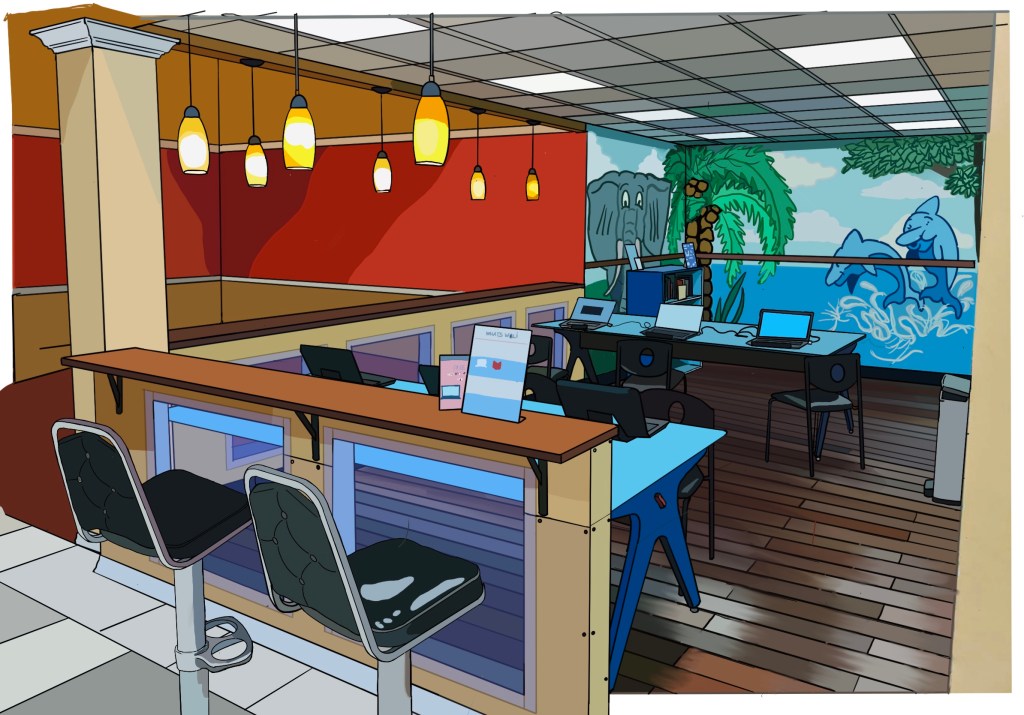
This is Laundry City, Fredericks Ave, Baltimore MD, as it currently is. This design was pulled together from extensive community research. The mural was completed by a local artist prior to the wali program and is important to the community. The tables, colors, and dresser were all chosen by community members during design events. The chairs were chosen by members of the laundromat staff for their versatility, lightweight, and wipe ability. We focused on efficiently and respectfully bringing services and capacity into the existing space to change it as little as possible. Before the WALI program was started in the space it was a children’s play area that looked quite similar. It has been difficult to engage adults in the space because of that legacy- and the mural.
Laundry City x culture house
This is a visualization I made of the same space reworked based on a collaboration with Aaron Greiner, a representative of Culture House. We set aside the specifics of this community and focused on creating a space with three major goals/values:
- That it would be appealing to all ages
- That all people and spaces deserve good design
- That the space should make people want to stay a while, or have “stickiness”
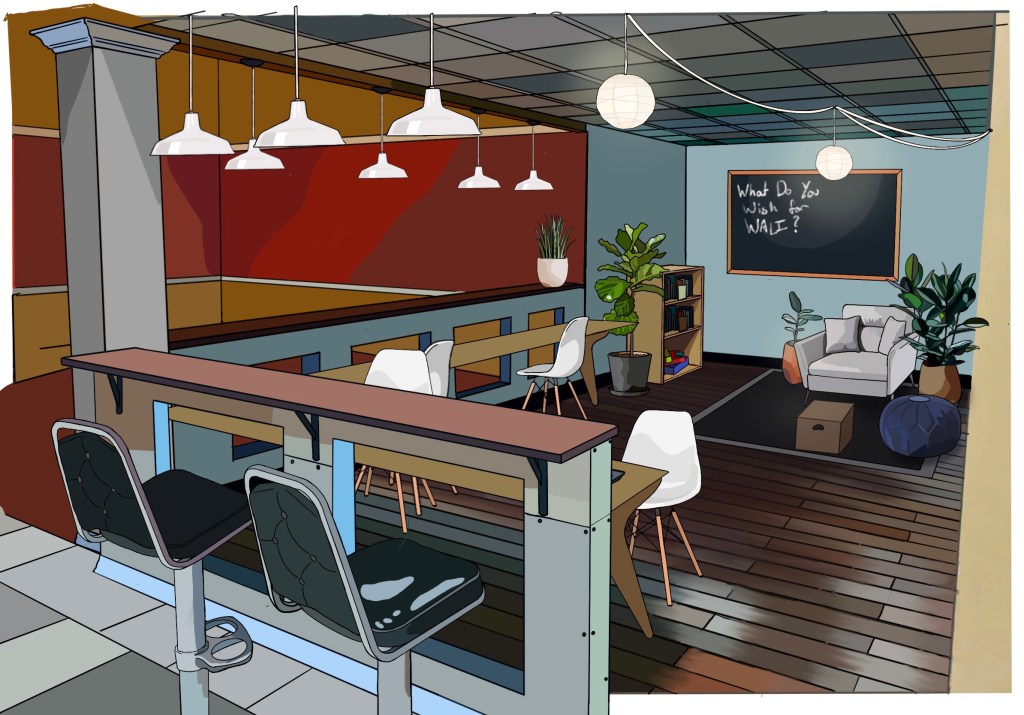
The first intervention had to do with treatments and lighting: turning off harsh fluorescents and replacing older fixtures to give a more inviting and soothing atmosphere, “less harsh, homier”. I replaced the murals, wall, and table colors with whites and grays, to reduce visual clutter. A carpet has been added for coziness and decoration. The plexiglass was removed from below the bar on either side for more openness and comfort. This also communicates that the space should protect you “not be protected from you”.
We added plants to make the space more beautiful and welcoming, Aaron pointed out that they need not be real to have a positive effect on the space.
The tables were turned against the wall to open the space and the depth of the tables was reduced since they only needed to accommodate people from one side in this arrangement. The chairs were replaced with a similar but slightly more substantial design, that is still easy to clean and move.
The new space in the back has been turned into a cozy spot, with low and soft seating, some of which is movable and flexible to be used in different ways. Games have been added and books and computers are still available to use.
 Frankie Devanbu